
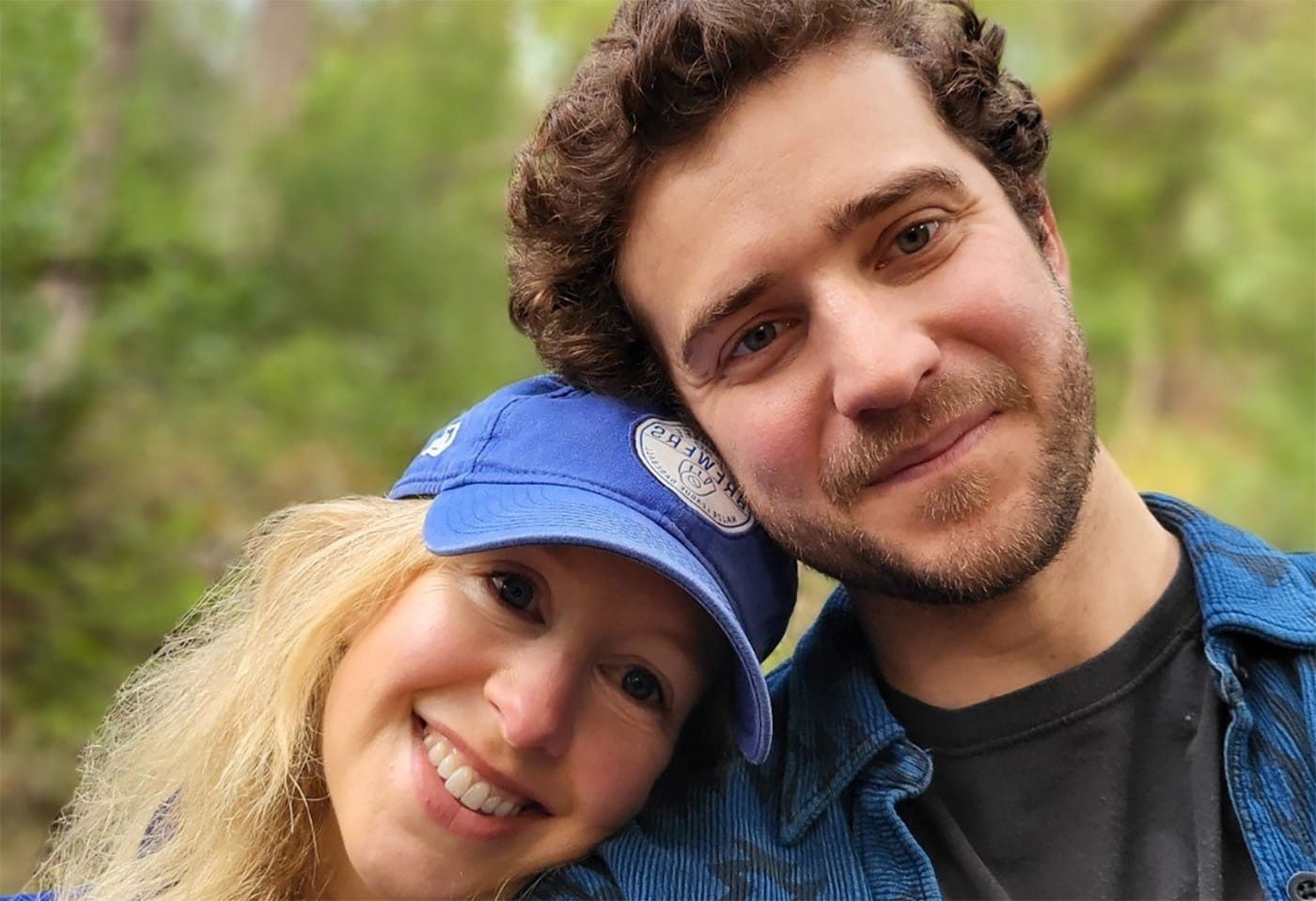
Nathan Fielder and Lance Oppenheim's documentary You Can See Everything, which was three years in the making, delivers, as promised, a gripping, tantalizing, and at times highly uncomfortable view into the final days of freedom of Elizabeth Holmes.
Picture it. It's the spring of 2023. Holmes and her baby daddy and partner of six years Billy Evans are holed up in a beachside rental house in Del Mar, California, shortly after Holmes has given birth to their second child. (It remains unclear if they ever had a commitment ceremony or signed any paperwork, though it's been reported that the two are not legally married — and this is likely because Evans's family, who own and operate boutique hotels in Southern California, don't want to be on the hook for Holmes's considerable restitution obligations.)
The couple has decided to open up their lives to a documentary film crew, and they specifically seek out Nathan Fielder. The film suggests that Holmes may not have had any idea who Fielder was, or anything about his work, but the first season of The Rehearsal had just aired on HBO the previous summer, his show Nathan For You was several years old, and Evans was likely the one who knew his work and sought him out. Evans allegedly said something to the effect that Fielder's off-beat style of interviewing people might mesh well with Holmes's unconventional ways of thinking and communicating.
They invite Fielder to film whatever he wants, even to stay with them in the house, which he at first declines. And as the days are counting down to Holmes's May 30 reporting date at FPC Bryan in Bryan, Texas, Fielder does move in, and he, and Oppenheim, and a small crew including a camera guy and a boom operator are camped out in the small house each day, watching and listening as Holmes and Evans hurriedly iterate on a new, very familiar sounding business venture. As we learned last year, that venture is called Haemanthus, and like Holmes's disgraced startup Theranos, it is marketing a blood-testing device, though this one involves "lasers" and appears to be going after the veterinary medicine market, at least for now.
This is despite a court order, part of Holmes's criminal sentence, that she not conduct any business or work in the medical device or healthcare space for 10 years. And as Evans (or a company spokesperson) said defensively on Twitter last year, "This is not Theranos 2.0. Theranos attempted to miniaturize existing tests... We use light to read the complete molecular story in biological fluids, seeing patterns current tests can’t detect. Not an improvement. A different paradigm."
Fielder is less interested in learning about this business venture than he is in interrogating Holmes's apparent inability to understand that she did anything wrong, or that she and Sunny Balwani committed fraud to the tune of hundreds of millions by claiming, to investors, to Walgreens, and others, that they had a device called Edison that could perform hundreds of tests using a single drop of blood.
As Holmes says in the film, this wasn't a lie. Why wasn't it a lie? Because it would have worked if the various "chemistries" needed to conduct these tests could have been invented in time. It wasn't a lie because her "invention" was an idea for a machine that would have done all the things she said it could do, eventually. Once the science caught up.
Holmes also makes the baffling claim to have never told a lie in her life, and there's the now meme-i-fied scene of her holding Fielder's gaze, doe-eyed, asking, "Why would I ever deceive you?" It's powerful because it's so creepy and off-kilter, and because we know she participated in a massive deception that has landed her in prison.
This all leads to some fascinating places, including Fielder making Holmes watch the famous Abbott and Costello comedy routine "Who's on First?" At the conclusion, Holmes just thinks the two men are "talking past each other," which is why it's funny — and she doesn't seem to get that words can mean two things, or that "Who" could be the name of a person, which is the joke.
Evans, who does a lot of speaking for Holmes in this film, concludes that this is simply because his partner sees the world differently from other people, and thus such humor is lost on her. The couple is seen cuddling as he comforts her for being so charmingly weird.
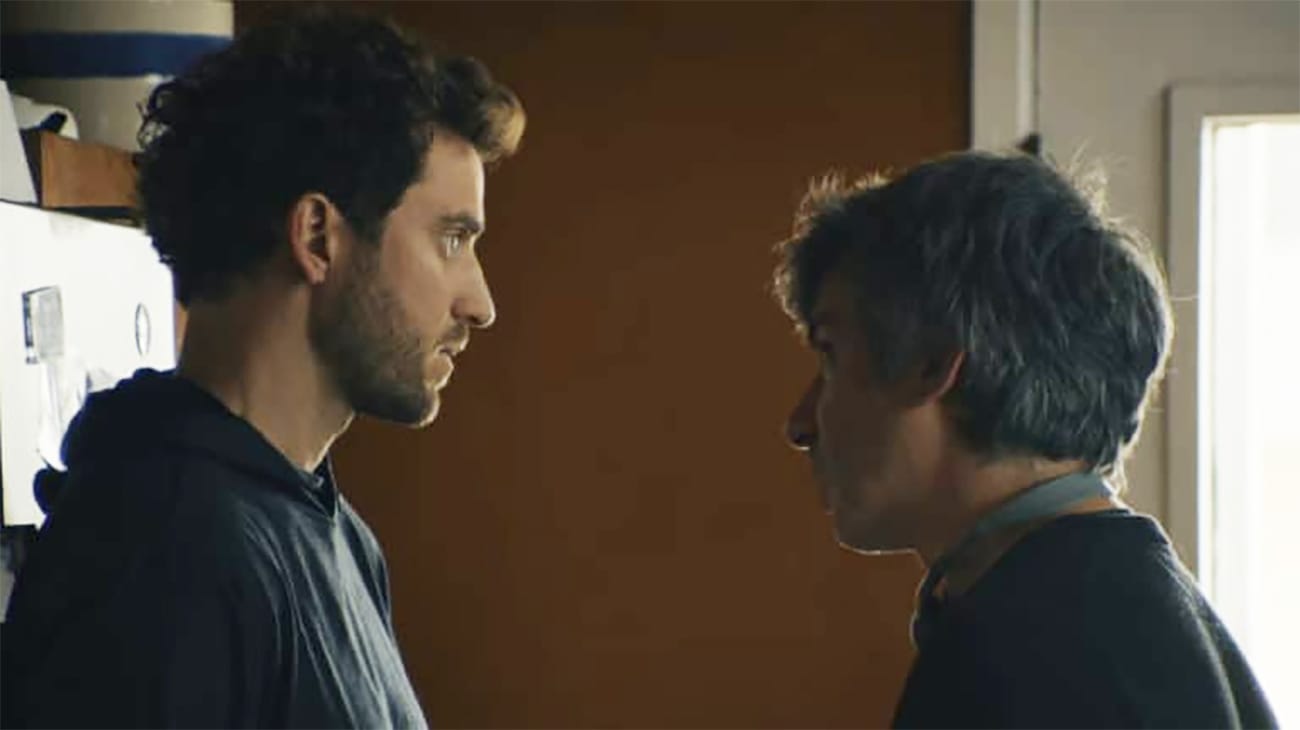
Without delving into too many spoilers, it seems that Fielder is genuinely baffled and perhaps even charmed by Holmes and her tenuous relationship with reality. It remains anyone's guess whether she is truly mentally incapable of parsing the truth, or whether she is just a brilliant con artist who is still running cons — maybe even having conned this handsome, rich heir to a hotel fortune to father her children, take care of them while she's in prison, help incubate a new business idea and be the face of that business, and maybe even help her pay some of those hundreds of millions back to defrauded investors.
The origin of the film's title is either inspired or reinforced by a shot of full-frontal nudity by Evans which you may have caught wind of by now. He allows the team's cameras to document his gym workout, and even to follow him into the shower afterward, leaving the curtain open and brushing his teeth, showing off perhaps?
Beyond this, Evans appears to grow more and more hostile to Fielder's fairly relentless and candid lines of questioning — about his family's wealth, about why he'd choose to date and have children with a woman charged with serious crimes, about whether Theranos wasn't just a great big con — and that hostility boils over in the latter third of the film, as he appears to want to shut down all access to Holmes going forward. He is a controlling, posturing, glowering, often arrogant presence, and one that makes the filmmakers question his motives.
Is he just a narcissist who enjoys the spotlight at all costs? A bored and talentless rich kid who finally found a purpose and maybe even a means to make his own fortune via the coattails of a very problematic, but obviously very cunning woman? A number of explanations are on the table, but actress Amanda Seyfried — who, as we already spoiled a month ago, steps in, Fielder-style, to reenact things in the second half of the film that couldn't be filmed — does not hesitate to call him a "narcissist" and a "jackass."
We also learn that Evans has power of attorney over Holmes while she's in prison, which she apparently agreed to, and he used this to access her verified X account, which he runs.
For all her frustrating vagueness and obfuscation, her pseudo academic-sounding manner of speaking, and her fractured sense of reality, Holmes comes out of this looking less unsympathetic — if only because it feels like she, herself, is being manipulated, or at the very least unhealthily controlled by yet another man.
Does it actually make her look sympathetic, though? Not really. It is a brilliant, genre-bending film that hits on multiple levels, raises new questions, and earns all of its three-hour runtime, which flies right by.
As he has been on The Rehearsal, Fielder is indefatigable and methodic in his probing of mysteries and interrogating the truth, even when that truth, cloaked in human frailty or capriciousness, feels incomplete at best. At least now we have some more insight into the life and mind of a woman who, for years, was just that deep-voiced, unblinking caricature of a con artist tech founder who convinced a great many people of her brilliance. And whether she gets what she wanted out of this intimate portrait is, of course, beside the point.
Previously: OMG Elizabeth Holmes Is Reportedly Getting Moved to a Halfway House Next Year


